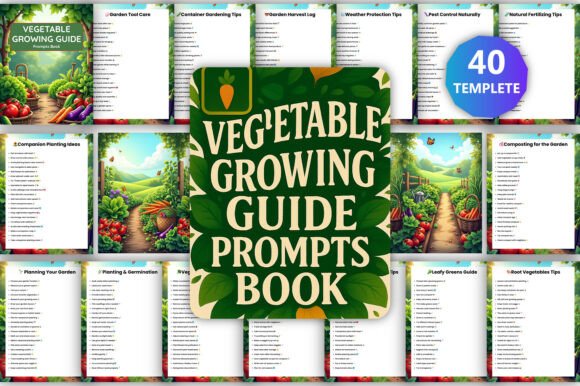
Vegetable Growing Guide Prompts Book
The Vegetable Growing Guide Prompts Book is more than just a gardening resource—it's a visual and conceptual tool designed to streamline the creative process for designers, marketers, and creators. By integrating practical prompts with graphic design principles, this book offers a unique approach to organizing ideas, enhancing brand communication, and improving user engagement through structured visual storytelling.
Designing with Purpose: The Role of Visual Structure
In modern graphic design, clarity and organization are paramount. The Vegetable Growing Guide Prompts Book exemplifies this by offering a framework that encourages designers to think visually and strategically. From layout planning to color coordination, each section of the guide aligns with the principles of visual hierarchy and brand identity. This makes it an ideal reference for those looking to create cohesive, professional designs that resonate with their audience.
Whether you're designing marketing materials, social media graphics, or editorial layouts, the prompts in this book help you break down complex tasks into manageable steps. For instance, the garden planning prompts can inspire a structured approach to creating a brand’s visual identity, ensuring consistency across all platforms.
Branding Through Gardening Concepts
One of the standout features of the Vegetable Growing Guide Prompts Book is its ability to translate natural processes into design strategies. The companion planting section, for example, can be reimagined as a metaphor for collaborative branding—where different elements work together to enhance the overall experience. This kind of thinking is invaluable when developing a brand identity that feels organic and interconnected.
Similarly, the harvesting and storage logs offer a model for tracking progress and refining your design workflow. Just as a gardener records yields and adjusts techniques, a designer can use these insights to improve the effectiveness of their creative assets over time.
Practical Applications in Graphic Design
The Vegetable Growing Guide Prompts Book is not limited to gardening—it serves as a versatile toolkit for various design applications. Here are a few ways it can be used:
- Branding and Logo Design: Use the layout and structure prompts to develop a consistent visual language for your brand.
- Social Media Content: Incorporate the seasonal charts and growth guides to create engaging, thematic content calendars.
- Website and UI Design: Apply the principles of companion planting to create harmonious layouts that guide users naturally through your site.
- Editorial Layouts: Utilize the journal prompts to structure storytelling in a way that enhances readability and emotional impact.
These applications demonstrate how the Vegetable Growing Guide Prompts Book can be adapted to meet the needs of different design projects while maintaining a strong focus on usability and aesthetics.
Enhancing Creativity with Design Assets
With access to editable Canva templates, high-quality PDFs, and JPG files, the Vegetable Growing Guide Prompts Book provides a comprehensive set of design assets that can be customized to fit any project. Whether you're working on packaging design, advertising campaigns, or digital products, the flexibility of these resources ensures that your final output is both professional and visually appealing.
Moreover, the inclusion of 40 different Canva templates allows for experimentation with various styles and formats. This diversity supports a wide range of creative projects, from print-based materials to interactive digital experiences, making it a valuable asset for designers at every stage of their workflow.
In conclusion, the Vegetable Growing Guide Prompts Book offers more than just gardening advice—it provides a strategic foundation for creating effective, visually compelling designs. By leveraging its prompts, templates, and insights, designers can elevate their work, strengthen their brand presence, and deliver meaningful communication that resonates with their audience.